

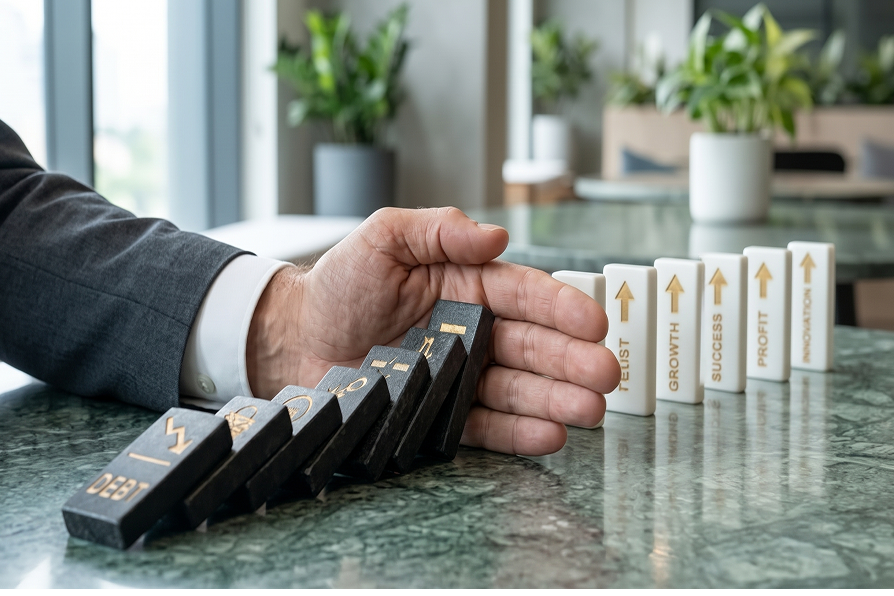

Reporters get things wrong more often than people outside the industry assume, and not usually out of carelessness. Newsrooms move fast, and a company’s full context is tough to fit into a few hundred words. What happens next depends entirely on the relationships that were already in place before the story ran.
What “Wrong” Actually Looks Like
“Wrong” covers more ground than most companies expect when they walk into their first press cycle. A few versions we see on a regular basis:
- A small fact error. The wrong founding year, a title that says “co-founder” for someone who joined as employee number twelve, a headquarters city that hasn’t been accurate in five years. Minor on its own, but it tells a customer or investor who knows better that nobody checked the piece before it ran.
- A bigger fact error. A misstated revenue figure, a product description that gets the function wrong, a claim about a legal outcome that isn’t accurate. These show up in sales calls and investor conversations for months after the story runs.
- A mischaracterization. A measured quote about market conditions gets framed as an admission that the business is struggling. The words are accurate. The framing around them is not.
- An angle nobody asked for. A CEO profile opens with an unrelated legal matter from a decade earlier, or ties a company to a controversy it had nothing to do with, because it made for a sharper opening paragraph.
Each version calls for a different response. Treating them all the same is usually the first mistake companies make when handling it on their own.
Why the First Call Matters More Than the First Draft
News editors revise stories because someone made a clear, specific case, and because the person making it has standing with that outlet. Standing isn’t built during the phone call. It’s built over years of accurate pitches, fair dealing, and reporters who trust that when you call about a problem, there really is one.
Several people on our team spent years in newsrooms before they came to PR. They know how a story moves through an editor, who actually has the authority to change a published headline, and when the right call is to the reporter versus the editor. A press release doesn’t teach you that, and it’s one reason companies that try to manage this in-house, or with a newer agency that hasn’t built those relationships yet, often accept the story as published and move on.
Left alone, an inaccurate story doesn’t fade quietly. It keeps surfacing in searches, in due diligence, and now in the summaries AI tools give when someone asks about a company. We wrote more about that compounding cost in the hidden cost of a story that goes sideways.
Two Calls That Changed the Story
The headline mentioned earlier was one of two situations we handled recently.
The reporting on that feature was accurate. The headline running above it wasn’t, framing the company far more critically than anything in the article itself supported. Our account director called the reporter directly and made the case for why the headline didn’t match the story. The paper revised it. The second version was better but still leaned harder than the reporting supported, so the account director called the reporter again and made the case a second time. The third headline was accurate. That happened because the account director had worked with that reporter for years and was making the case as someone the newsroom already trusted.
The second situation involved a television interview. A client spokesperson made a remark during the interview that seemed harmless in the moment. Once it was used in the finished piece, both in the video and the accompanying copy, it did not land well with the client or with a major partner. Our team used our relationship with the outlet to ask for a revision and explained why the words needed more context. The outlet updated both the copy and the video. Edits like that, after a piece has already run, are rare. It happened because our relationship with that newsroom predated the interview by years, and our team has the experience and knowledge to manage requests like that.
Nobody hires a PR partner hoping to test how fast a mistake gets fixed. Most companies find out anyway, eventually. A fact gets garbled. A quote gets cropped down to the line that reads worst. A reporter takes an angle to their editor before you get a chance to weigh in. When that happens, what helps is a phone call, sometimes two, from someone the reporter already trusts.
If you’re evaluating a PR partner, ask about the last correction they got and exactly how they got it. The answer will tell you more than a client list ever will. That’s the kind of work an experienced media relations team does regularly, and we’d rather you meet ours before you need us.
Let's Talk
Let’s get your brand the attention it deserves.
"*" indicates required fields